The entrepreneur in English Harbour
A young Antiguan entrepreneur wins a contract to refinish a yacht for an owner in Lagos. She and her client share a language, a legal tradition and a way of doing business. Then comes the payment. It passes through two or three correspondent banks in New York, loses fees along the way, and nobody can say how much will arrive or when.
For a multinational that is an irritation. For a small business it is the difference between growing and going under.
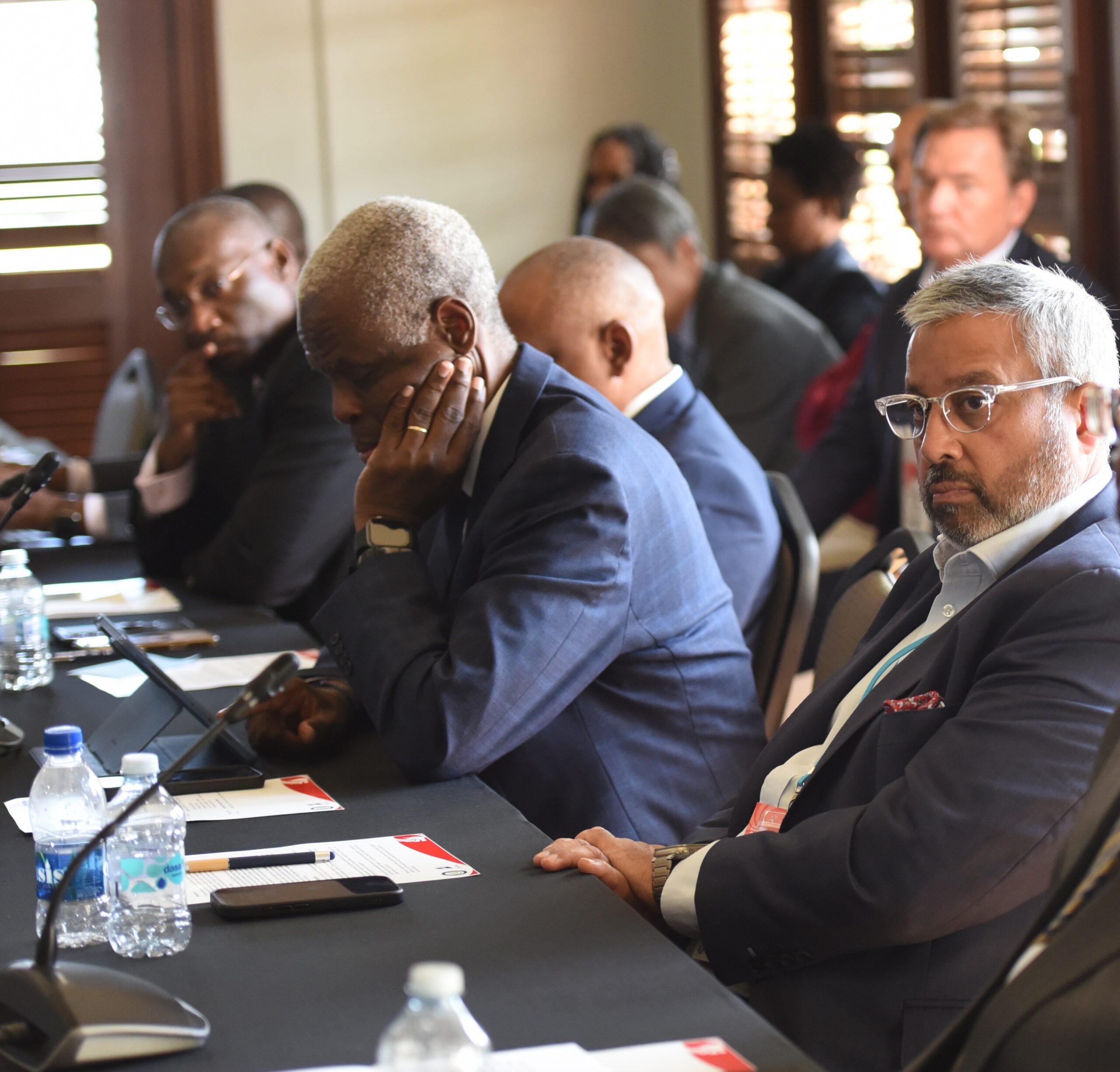
That was how Governor Timothy Antoine of the Eastern Caribbean Central Bank opened last week’s Central Bank Governors’ Roundtable at the Commonwealth Business Forum. Trade within the Commonwealth is already a fifth cheaper than trade outside it. Yet only about one dollar in five of Commonwealth trade stays inside the Commonwealth, against three in five in the European Union. The advantage exists but we’re not collecting it.
We’re measuring the wrong thing
The G20 roadmap tells us to measure cross-border payments by speed and cost. For most of the Commonwealth, that is the wrong test.
The rails are already fast and getting faster every year. The question is whether banks want to use them for local currencies. The big correspondent banks did not leave Kingston, Nairobi or Colombo because payments were slow. They left because what they earned in those currencies fell short of their compliance costs. Speed and cost are the old ideas. Participation is the new one. The measure that really matters is how many banks show up.
The British economist, John Maynard Keynes, in the preface to The General Theory of Employment, Interest and Money (1936), said the difficulty lies not in the new ideas but in escaping the old ones. I see that everywhere I travel in the Commonwealth. There is no shortage of ambition or need. What is missing is practicality, and the speed at which a group of willing institutions can execute.
Three things we can do now
Crown Agents Bank clears more than 120 currencies, almost all of them outside the G20. We stayed when others left and understand better than most that taking three practical steps could change the risk calculation for every large, global bank looking at these markets.
- Write the FX access rules down and share them. Where the rules for getting currency out are clear and predictable, we can finance that corridor and bring others in behind us. We will sit down with any central bank and work through what the market needs to see.
- Allow direct settlement. Let specialist banks settle in local markets, enabling several routes to the rest of the world rather than one. That is a conversation between banks’ operations teams and ours, and it can start now.
- Recognise each other’s KYC. A customer who has been through full due diligence in Nairobi should not be re-examined in Kingston. Duplication is the single biggest cost in the chain. With shared legal traditions, the Commonwealth Secretariat is better placed than anyone to agree a common standard, which we will contribute to with what we know works.
Go far together
The Caribbean is already proving the point. The Caribbean payment system (CAPS) currently being built on the Pan-African Payment and Settlement System (PAPSS) model is a template for a Commonwealth-wide rail. I see no reason the C in CAPS could not one day stand for Commonwealth.
An African proverb I heard in Kenya says: if you want to go fast, go alone; if you want to go far, go together. We can do both. The rails are fast already. Working together is how we go far.
Everything I’ve described sits within the gift of the people who were around that table: the rules, the settlement access, the recognition of each other’s standards, the system itself. None of it needs a new declaration. It needs collaboration and execution. The test, as Governor Antoine put it, is whether our entrepreneur in English Harbour can be paid faster, more cheaply and more safely than she is today.